


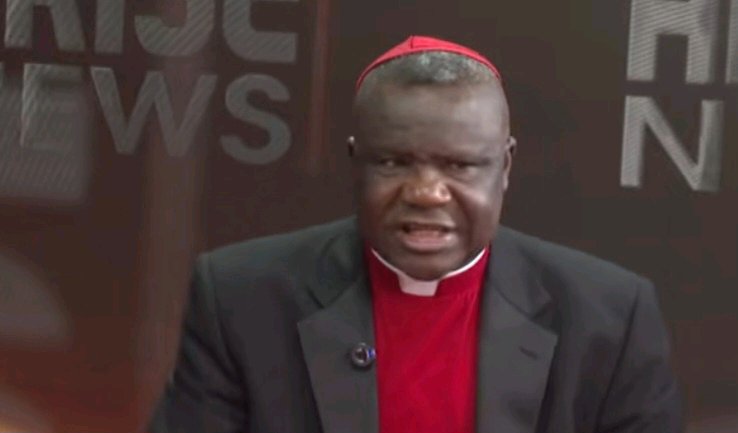
Professor Femi Otubanjo of the Nigerian Institute of International Affairs (NIIA) has offered a critical evaluation of the ongoing presidential contest within the African Democratic Congress (ADC), stating that the rising dominance of former Vice President Atiku Abubakar in the party aligns with long-established political trajectories and should not be viewed as unexpected.
The political analyst made the remarks during a televised interview on Arise News on Thursday, May 28, 2026, where he discussed evolving alignments within Nigeria’s opposition landscape ahead of the 2027 general elections.
Otubanjo examined the internal dynamics of the ADC presidential race, highlighting how power structures within the party appear to be consolidating around a central figure with extensive national reach and political experience.
He argued that Atiku’s growing influence in the ADC reflects deliberate strategic positioning shaped by years of national political engagement, coalition building, and sustained participation in presidential contests.
According to him, the development within the party is consistent with patterns often observed in Nigerian politics, where prominent figures gradually shape party direction through influence, alliances, and organizational strength.
Speaking during the programme, Otubanjo stated, “Atiku created ADC for himself; what is surprising is Amaechi’s move to contest against him.”
He made the remark while assessing what he described as the evolving hierarchy within the opposition party’s presidential structure.
The analyst suggested that Atiku’s prominence in the ADC presidential race is a predictable outcome of his political history and deep-rooted connections across various regions of the country.
He further explained that the former vice president’s repeated participation in national elections has enabled him to build enduring political relationships that continue to influence party dynamics.
Otubanjo noted that in contrast, Rotimi Amaechi’s decision to enter the race represents a more challenging political calculation, given the existing strength of established figures within the same political space.
He emphasized that presidential contests in Nigeria are rarely determined solely by ambition, but rather by the depth of political structures, alliances, and long-standing influence across geopolitical zones.
According to him, the ADC’s internal configuration appears to be gradually aligning around a dominant figure whose political reach extends across multiple layers of national organization.
The professor further observed that such developments are typical in coalition-driven political platforms, where influence often consolidates around individuals with broader national recognition.
He added that Amaechi’s participation, while significant, highlights the difficulty of competing against entrenched political actors with extensive networks and institutional backing.
Otubanjo maintained that the unfolding situation within the ADC reflects broader realities in Nigerian opposition politics, where internal contests often mirror existing power asymmetries.
He also suggested that the structure of the party’s presidential race may have long-term implications for unity and post-primary reconciliation efforts.
According to him, maintaining cohesion after such competitive primaries will be essential if the ADC intends to present a strong and unified front ahead of the 2027 elections…..See More





















Leave a Reply