

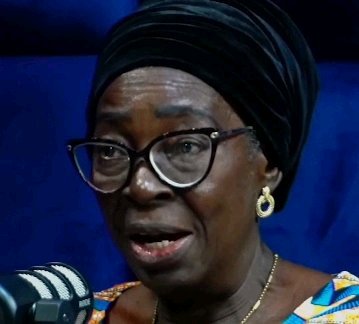
Survivor of the Nigeria-Biafra war, Juliet Ogbogu, has shared a deeply emotional account of how her family struggled to survive during the conflict, describing the extreme measures they took daily to avoid being caught in the crossfire.
Ogbogu gave the account during an interview on the State Affairs programme hosted by Edmund Obilo, where she reflected on her childhood experiences during the Nigerian Civil War.
She explained that life in 1967 was defined by constant fear, as air raids and gunfire made ordinary living impossible for civilians in affected areas such as Umuahia and surrounding communities.
According to her, families had no choice but to improvise survival strategies in the absence of formal shelters or protection from the ongoing violence.
She described how her mother played a central role in protecting the family, ensuring that they had food while also keeping them safe from aerial attacks and stray bullets.
Ogbogu recounted how their daily routine revolved around hiding during the most dangerous periods of the day, particularly in the mornings when air raids were frequent.
In her words, “In the morning, my mother will prepare food and move all of us into a culvert behind our house. We will sit down there so that the bullet will not hit us.”
She further explained that the culvert, which was originally constructed as a drainage system, became a makeshift shelter for the family and others in the community seeking protection.
For many civilians during the war, such structures became vital hiding places, as formal bomb shelters were not available in most residential areas.
Ogbogu noted that while the culvert offered some level of protection, it was far from comfortable, especially for children who had to spend long hours underground in fear and uncertainty.
She said the experience of hiding in such confined spaces became part of everyday life, with families often moving in and out depending on the intensity of air raids.
“In those days, we had no real choice,” she implied during the interview, emphasizing the lack of safety infrastructure available to civilians at the time……See More

























Leave a Reply