

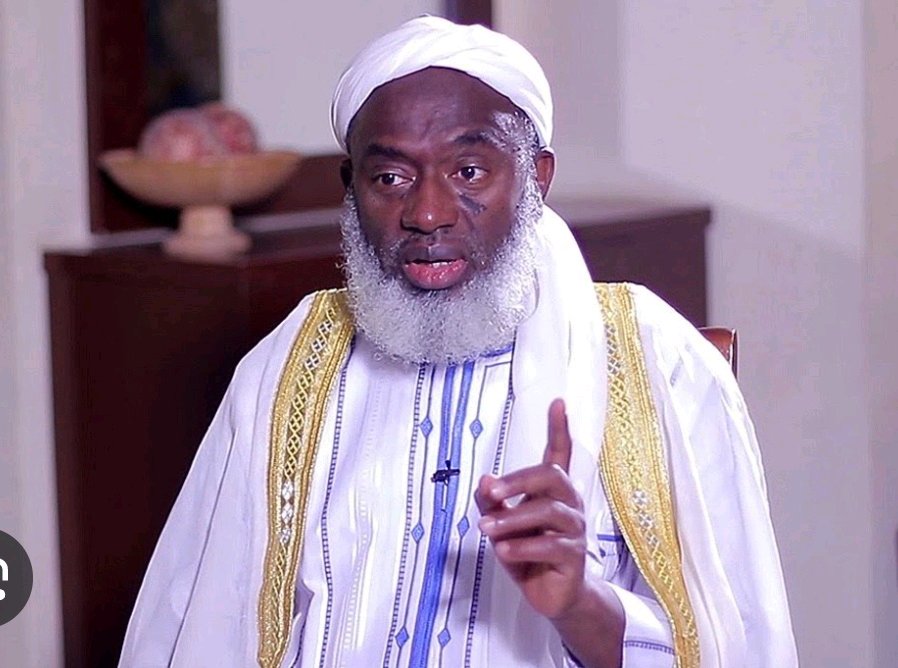
According to a report by The Sun News, on Tuesday, June 9, 2026, prominent Islamic scholar Sheikh Ahmad Gumi stated that what he described as an unfounded fear of Islam and Muslims is increasingly influencing political discourse in Nigeria’s South-West region.
The cleric also appealed to critics to exclude him from what he termed local political controversies, following reactions that trailed his recent visit to Ibadan, the Oyo State capital.
Gumi’s remarks came amid ongoing discussions surrounding the abduction of 46 pupils and teachers in Oriire Local Government Area of Oyo State on May 15.
Reports had circulated in some quarters alleging that the kidnappers demanded the implementation of Sharia law in the state as part of the conditions for releasing the captives.
However, those claims were later challenged by one of the victims. In a video released by the abductors and shared publicly on Monday, Mrs. Rachael Folawe Alamu, who spoke while still in captivity, dismissed reports suggesting that the gunmen had requested the introduction of Sharia law in Oyo State.
She also refuted claims that the kidnappers demanded a ransom of N1 billion.
According to her account, the armed men made no such religious or financial demands.
She explained that the group’s primary request was the release of their associates who were reportedly being detained by Nigerian security authorities.
The controversy surrounding the alleged Sharia demand also attracted the attention of the Muslim Rights Concern (MURIC).
In a statement issued on Monday, the Islamic advocacy organization rejected reports linking the abductors’ demands to the implementation of Islamic law.
The group maintained that such claims were inaccurate and did not reflect the information available regarding the incident.
Responding to MURIC’s position and the wider public debate, Gumi took to Facebook to express his concerns over what he believes is a growing trend of Islamophobia within the South-West.
He argued that misconceptions about Islam are being exploited in political discussions and are contributing to unnecessary tension and division.
The cleric suggested that the reactions to his visit to Ibadan reflected these sentiments, insisting that he had been unfairly drawn into issues unrelated to the purpose of his trip.
He maintained that his presence in the city was not connected to any political agenda or local religious dispute.
He Said, “I was in Ibadan not by the invitation of any SW Muslim individual or group but as a representative of the Coalition of Northern Muslim Ulama.”
Gumi further questioned why his movement within the country should generate controversy, emphasizing that every Nigerian citizen has the constitutional right to travel freely and visit any part of the nation without suspicion or resistance.
Expressing disappointment over the reactions that followed his visit, he noted that some individuals appeared to have formed conclusions based on assumptions rather than facts.
According to him, the situation highlights how certain narratives can easily gain traction and fuel misunderstanding among different communities.
The Islamic scholar also alleged that both domestic and foreign interests may be playing a role in promoting narratives capable of deepening divisions within the country.
He argued that such efforts appear designed to create mistrust among Nigerians and widen existing social and political fault lines.
Gumi concluded by warning against actions and narratives that could further polarize the nation, stressing the need for greater understanding, tolerance, and unity among citizens regardless of religious or regional differences.























Leave a Reply