

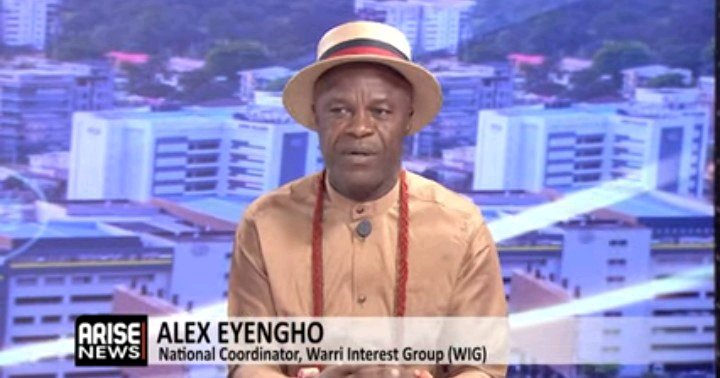
According to a video posted on the official YouTube channel of Arise News on Saturday, May 23, 2026, National Coordinator of the Warri Interest Group (WIG), Alex Eyengho, stated that the Itsekiri people were not opposed to the Supreme Court judgment ordering a fresh ward delineation in Warri Federal Constituency.
Speaking during an interview, Eyengho stressed that the group’s concern was with the manner the Independent National Electoral Commission carried out the exercise. According to him, “We are not against the Supreme Court judgment, but we are against INEC for going outside its statutory mandate.”
He argued that the electoral body exceeded its constitutional responsibility by allegedly introducing communities and coordinates outside the legally recognised Warri Federal Constituency during the delineation process. He maintained that INEC’s role was administrative and not that of a boundary adjustment commission.
Eyengho also insisted that the latest document released by INEC was only a proposal and not a final report, contrary to celebrations in some quarters. He explained that stakeholders from the Itsekiri, Ijaw and Urhobo ethnic groups were invited to study the proposal and submit their observations before a final decision would be reached.
The WIG coordinator further called for peace, fairness and strict compliance with the law in resolving the sensitive matter……See More
























Leave a Reply