

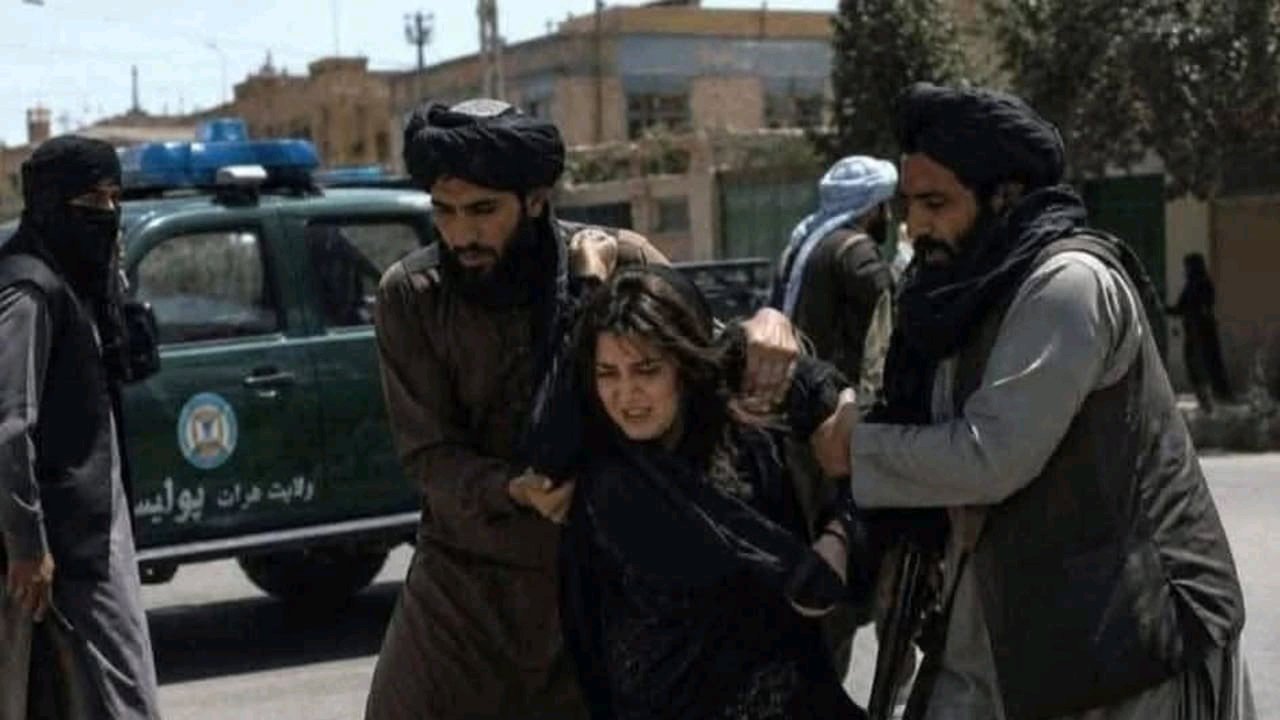
According to a report by The Jerusalem Post on Wednesday, July 22, 2026, an Afghan woman who converted from Islam to Christianity says she fled Taliban persecution only to face the threat of deportation from Qatar, raising fresh concerns about the safety of vulnerable Afghan refugees forced to seek protection abroad.
Ziba Mastoor, a former Afghan government official, said she escaped Afghanistan after Taliban intelligence operatives allegedly targeted her because of her Christian faith. After initially seeking refuge in Pakistan, she recently travelled to Qatar on a temporary visitor visa but fears she could be returned to Afghanistan once her visa expires.
Her case highlights the growing uncertainty facing thousands of Afghan refugees, particularly women, religious minorities and former government employees, as neighbouring countries tighten immigration policies and accelerate deportations.
According to Mastoor, she served in a senior position during the administration of former President Ashraf Ghani before the Taliban regained control of Afghanistan in August 2021.
She told The Media Line that Taliban intelligence agents attempted to arrest her during a night raid on her home after discovering she had converted to Christianity in 2019. She claimed she narrowly escaped before the operatives could detain her.
Mastoor further alleged that Taliban authorities later issued what she described as a sentence of “stoning to death” because of her conversion and subsequently harassed members of her family while searching for her. The Media Line noted that it was unable to independently verify the existence of such a sentence.
“My faith guided me to make this genuine and personal choice,” Mastoor said, adding that her parents, who are ethnic Tajik Muslims, strongly opposed her conversion.
She said the continued pressure from Taliban operatives forced her to flee to neighbouring Pakistan, where she hoped to rebuild her life. However, she claimed she remained under constant fear after receiving information that Taliban agents were attempting to track her across the border.
Acting on warnings from trusted contacts in Kabul, she left Pakistan and travelled to Qatar, where she is now seeking protection.
Her fears come as Pakistan and Iran have intensified efforts to deport undocumented Afghan nationals, a move that has alarmed international humanitarian organisations and refugee advocates.
Since the Taliban returned to power nearly five years ago, Afghanistan has experienced sweeping restrictions on women’s rights and civil liberties. Girls have been barred from attending secondary schools and universities, while women face severe limitations on employment, freedom of movement and participation in public life.
Women who have protested against the Taliban’s policies have reported arbitrary arrests, imprisonment and intimidation.
International Islamic organisations, including the Organisation of Islamic Cooperation (OIC), alongside numerous Muslim scholars, have criticised the Taliban’s restrictions on women, arguing they have no basis in Islamic teachings.
Human rights organisations have also documented widespread persecution of religious minorities, journalists, civil society activists and former government officials under Taliban rule.
Although Afghanistan’s Christian population is believed to be extremely small, its exact size remains unknown because most converts practise their faith in secret for fear of persecution.
Mastoor estimated that only a few hundred Christians remain in the country and appealed to churches and Christian organisations worldwide to assist her in securing asylum before her visa expires.
Kabul-based political analyst Fazal Ur Rehman Zadran said it is almost impossible to determine the number of Christians living in Afghanistan because openly practising Christianity is prohibited.
He noted that some members of the Hazara Shiite community had converted to Christianity over the years, partly due to decades of persecution and violence.
According to Zadran, many Christian families concealed their religious identities or fled to Pakistan and Iran after the Taliban takeover. However, stricter immigration policies in both countries have left many living in uncertainty and fearing forced repatriation.
The Office of the United Nations High Commissioner for Refugees (UNHCR) has also expressed concern over the increasing deportation of Afghan refugees.
UNHCR spokesperson Qaiser Khan Afridi said Pakistan had hosted millions of Afghan refugees for more than four decades despite facing significant economic and social challenges. However, he stressed that refugees should not be forced to return to any country where their lives or freedoms could be at risk.
The agency has repeatedly warned that Afghan women, girls and other vulnerable groups face heightened dangers if returned to Taliban-controlled Afghanistan and has urged authorities to ensure any repatriation is voluntary, safe and dignified.
When contacted by The Media Line, Taliban spokesperson Zabihullah Mujahid rejected claims that a Christian community exists in Afghanistan.
He said there were no officially recognised Christians or churches in the country but did not directly address Mastoor’s allegations that Taliban authorities had attempted to arrest her or sought to punish her for converting.
Human rights advocates say Mastoor’s experience reflects a broader crisis affecting thousands of Afghans who remain stranded outside their homeland.
Rebecca Trotter, co-founder of the US and Switzerland-based non-governmental organisation Food for Thought Afghanistan, criticised what she described as the international community’s limited response to Afghanistan’s deteriorating human rights situation.
She argued that symbolic condemnations alone have failed to improve conditions for Afghan women and vulnerable communities.
Trotter said her organisation is currently working to relocate 60 at-risk Afghan women’s rights activists from Pakistan to safer third countries after successfully resettling 31 families last year.
Similarly, Tehran-based activist Hadia Sahibzada, founder of the Afghanistan Women’s Voice Movement, described the Taliban’s treatment of women as one of the world’s most severe human rights crises.
She called the group’s policies a form of gender apartheid and warned that deported Afghan women could face persecution, arbitrary detention and severe punishment upon their return.
Sahibzada urged governments not to normalise diplomatic relations with the Taliban but instead increase pressure on the regime, pursue accountability for alleged human rights abuses and expand protection programmes for Afghan women, religious minorities and other vulnerable refugees……See More
















Leave a Reply